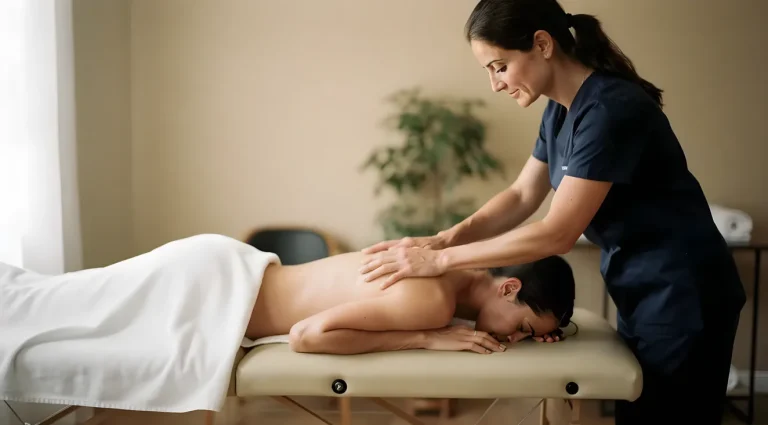
Massage may ease some kinds of muscle and back pain for a while, may reduce soreness after hard exercise, and may lower anxiety in the short term. Many people also find it relaxing. Those are the massage benefits with the most support, and the support is modest. Most studies are small, and they are hard to run fairly because people know whether they were massaged. Reviewers rate most of the evidence low or very low certainty, and it is not clear how long any benefit lasts.
Massage is not medical care, and some people should check with their doctor first, so this post includes a list of who should ask a doctor before a session.
The table below grades the benefits with the most research behind them, along with the one people mention most.
| What people hope for | What the research found | How sure |
|---|---|---|
| Short-term pain relief | Low back pain: less pain than with sham therapy, a waiting list or no treatment in the short term, but not at long-term follow-up. Compared with other treatments such as exercise or physical therapy, pain was also lower with massage at both time points, though the long-term result was borderline. Certainty was low or very low. | Modest, short-term |
| Less soreness after hard exercise (delayed onset muscle soreness, the ache that shows up a day or two later) | Reviews in 2017 and 2020 both found less soreness after massage, with wide variation between studies. The 2020 review called the gain small and found no gain in strength, jumping or sprinting. The 2017 review reported some gains in muscle force measures. | Varies widely |
| Feeling less anxious right after a session | A 2004 pooled analysis covering 37 studies and nine outcomes found single sessions lowered anxiety. | Short-term, older research |
| Feeling more relaxed | Many people find massage relaxing. Relaxation was not one of the main outcomes in the reviews cited here. | Personal experience |
For pain, the two best sources point the same way. A 2015 Cochrane review of massage for low back pain included 25 randomized trials (studies that assign people to groups by chance). It found short-term benefit over sham therapy, a waiting list or no treatment, yet the authors wrote that they have “very little confidence” massage is an effective treatment. One reason is that in massage trials it is hard to keep participants, therapists and the people measuring results from knowing who got a massage.
A 2024 review of reviews in JAMA Network Open reached a similar place. It found seven conclusions rated moderate certainty by the earlier reviews’ own authors, all favoring less pain. Two concerned massage itself (myofascial pain and short-term chronic low back pain). The other five concerned related techniques: myofascial release (chronic low back pain, fibromyalgia, pain after breast cancer surgery) and acupressure (labor pain, low back pain). None of its conclusions reached high certainty.
Sleep, headaches, circulation and depression all have thinner evidence for massage than pain or soreness do, and the sources support only cautious wording.
The research on sleep is limited and mostly in people who are ill. One review covered hospital intensive care patients and rated its certainty low, and another covered cancer survivors and found a small base of evidence, so neither says much about healthy adults. The National Center for Complementary and Integrative Health (NCCIH) also notes that massage did not affect sleep disturbance in people with fibromyalgia.
For headaches, NCCIH says only a small number of studies have looked at massage, and the results have not been consistent.
Better blood flow is often given as the reason massage might help, but the sources here found no clear support for it. A 2005 review lists more blood flow only as a proposed mechanism, and a small 2010 experiment found reduced forearm blood flow after massage. On blood pressure, a 2004 pooled analysis saw lower readings after single sessions. A 2024 pooling of six studies in people with high blood pressure found a minimal change, not clearly different from none. The two findings differ, so the evidence on blood pressure is mixed.
For depression, a 2010 pooled analysis of 17 studies found fewer depressive symptoms after massage. The trials were in people with depressive symptoms and searched studies only up to 2008, so the result says little about an everyday low mood.
Thinner evidence at a glance
| Topic | What the sources found |
|---|---|
| Sleep | Limited research, mostly in people who are ill |
| Headaches | Only a small number of studies, and the results have not been consistent |
| Blood flow | The sources here found no clear support; the evidence on blood pressure is mixed |
| Depression | Studied in people with depressive symptoms, so it says little about an everyday low mood |
The research does not settle how long massage effects last, and the answer depends on what massage is compared with.
In the Cochrane back pain review, people who had massage did better than those given sham therapy or no treatment at the short-term check, and that gap was gone at long-term follow-up. A 2020 sports review reported one study where a flexibility gain appeared right after massage but was not maintained. The authors of the 2024 JAMA Network Open review say trials comparing massage with other recommended treatments need follow-up long enough for the effects of receiving any new treatment to fade, and cite at least six months as a period proposed for chronic pain studies.
One 2010 trial in people with generalized anxiety disorder is a useful reality check. It gave 68 people 10 sessions over 12 weeks. Massage did no better than heat or a relaxing room, and everyone improved, which the authors credited to a general relaxation response.
Some of the calm may come from being still, warm and cared for, which is worth having anyway. That part is an inference, not something the trial measured.
How long the effects last, by study
| Study | What happened over time |
|---|---|
| Cochrane back pain review | People who had massage did better than those given sham therapy or no treatment at the short-term check, and that gap was gone at long-term follow-up |
| 2020 sports review | In one study, a flexibility gain appeared right after massage but was not maintained |
| 2010 anxiety trial | Massage did no better than heat or a relaxing room, and everyone improved |
The sources used here don’t support the ideas that massage removes toxins or clears lactic acid.
On toxins, the massage profession’s own journal says so directly. In a 2022 piece on myths in massage research, the American Massage Therapy Association’s Massage Therapy Journal wrote of the idea that massage flushes toxins, “There simply is no scientific evidence to support this idea.” That is a trade group arguing against a claim its own field has repeated.
Lactic acid is a separate matter, and it has two parts. First, next-day soreness is not caused by lactic acid. In a 1983 treadmill study, level running raised lactic acid without causing soreness, while downhill running caused soreness without a rise. A physical therapist at a large hospital system explains that lactic acid is generally gone within about an hour, and that soreness arriving 24 to 72 hours later comes from tiny muscle damage and inflammation.
Second, massage did not speed lactic acid removal in the one experiment found. Twelve people did hard handgrip exercise, and massage of the forearm afterward slowed lactate clearance (the measure used for lactic acid) compared with resting. That was one muscle group and one exercise, so it says little about massage in general.
Online summaries also say massage lowers the hormone cortisol. The 2004 pooled analysis found single sessions did not reduce cortisol.
Claims the sources do not support
| Claim | What the sources say |
|---|---|
| Massage removes toxins | The American Massage Therapy Association's Massage Therapy Journal wrote, "There simply is no scientific evidence to support this idea." |
| Lactic acid causes next-day soreness | Next-day soreness is not caused by lactic acid |
| Massage speeds lactic acid removal | Not in the one experiment found, which was one muscle group and one exercise |
| Massage lowers cortisol | The 2004 pooled analysis found single sessions did not reduce cortisol |
Massage is not medical care, and NCCIH advises against using it to postpone seeing a health care provider about a medical problem. Pain that lingers, gets worse or comes with other symptoms is worth raising with a doctor.
For cancer, NCCIH says the evidence that massage relieves pain and anxiety is not strong, though with precautions it can be part of supportive care. The American Cancer Society advises discussing any integrative therapy, including massage, with your cancer care team.
NCCIH says the risk of harm from massage appears low. There are rare reports of serious effects such as a blood clot, nerve injury or bone fracture, some involving vigorous types such as deep tissue massage or people at higher risk, such as older adults.
Pressure is yours to control. Tell your therapist if pressure feels too deep or uncomfortable, and tell them right away about any pain that causes discomfort. If you’re choosing between a lighter and a firmer style, NCCIH reports that for low back pain, a 2016 federal evaluation of six studies comparing types of massage found the evidence insufficient to show whether any type works better than another. This post on how deep tissue and Swedish massage differ lays out the comparison.
One large medical center’s patient guidance on preparing for massage names the situations below. Talk with your doctor before a massage if you:
If you’re managing anything else, such as a skin condition, a fever or an infection, tell your doctor and your therapist before the appointment. Treat the list as a starting point, and check with your doctor first whenever you’re unsure.
After a massage, many people describe feeling relaxed, and some soreness can happen. In the back pain trials Cochrane reviewed in 2015, the most common side effect was more pain, reported by 1.5% to 25% of participants, and those trials reported no serious adverse events. The 2024 JAMA Network Open review also noted milder effects in some trials, such as discomfort, dizziness, sleepiness or nausea. If pain worries you, tell your therapist right away. If it lasts or keeps building, talk with your doctor.
No research used here sets a right schedule for regular massage in someone who simply wants to feel better. The authors of the 2020 sports review noted that few studies look at regular, repeated massage, and the Cochrane and JAMA Network Open reviews covered people with specific pain conditions. How often to go depends on your goal, your budget and how you feel afterward, and a licensed massage therapist can help you decide.
So Young Day Spa in Plano lists its styles on the massage menu, including Swedish, Deep Tissue, Sports, Thai, Aromatherapy, Cupping, Pregnancy and Couples, so you can look them over before you call. The spa’s signature style, Pressure Point Massage, applies firm, rhythmic pressure and kneading.
Before every session, the licensed therapist asks about your goals, injuries, sensitivities and preferred pressure, and pressure can be adjusted at any point.
To get started, call (469) 988-9050, then choose a time. If any condition from the doctor-first list applies to you, check with your doctor first and mention it on the call. Walk-ins are welcome when availability allows, and calling ahead is recommended.
